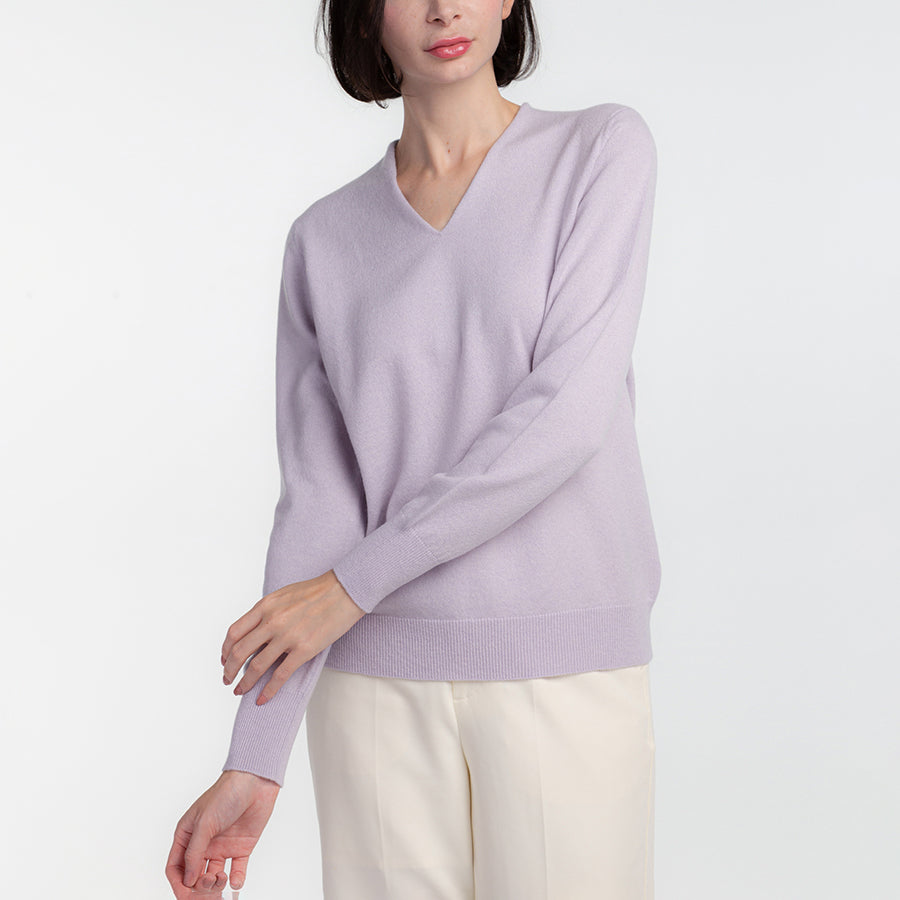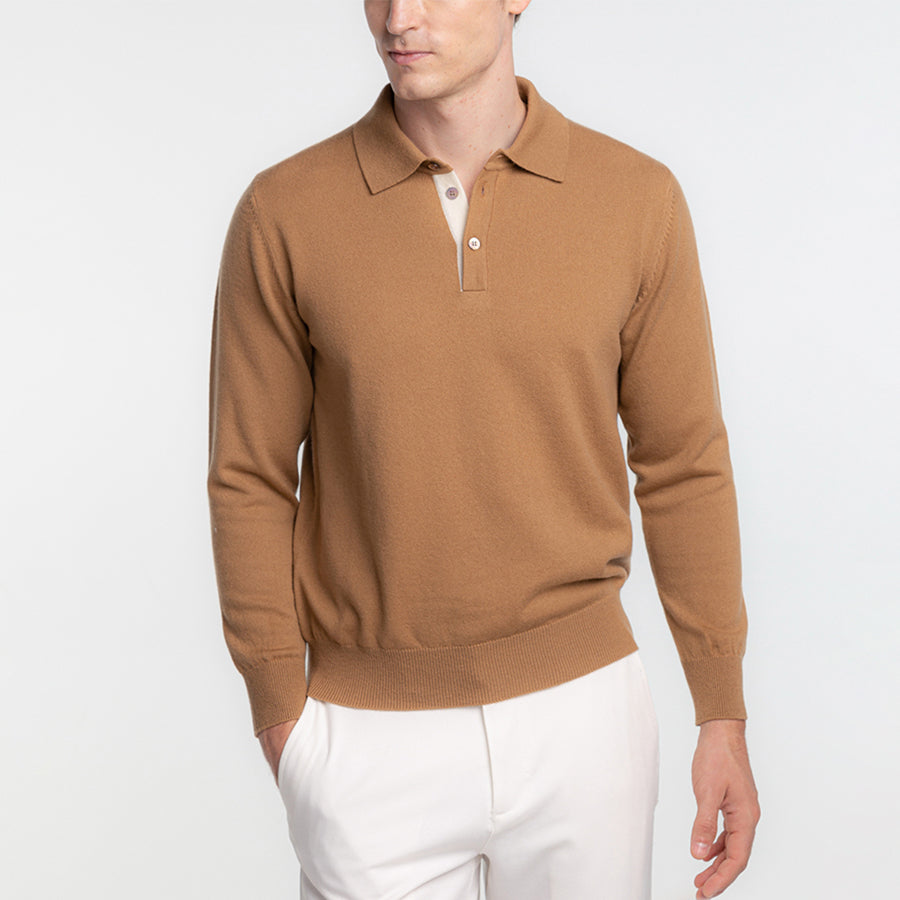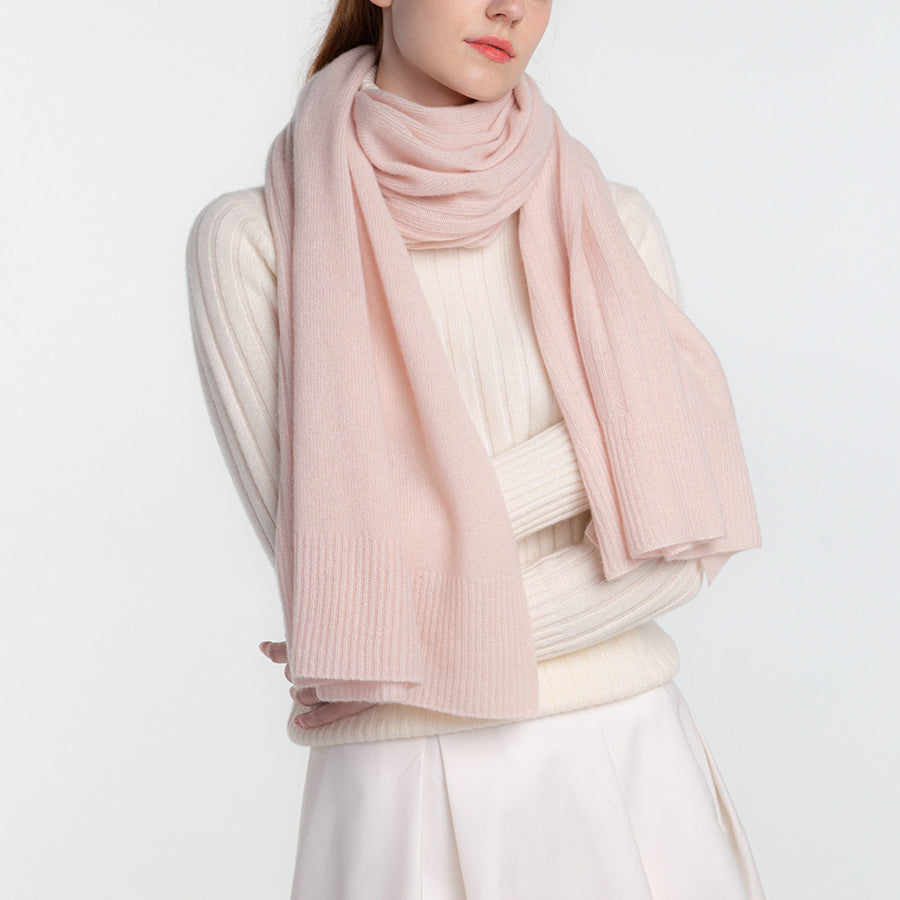
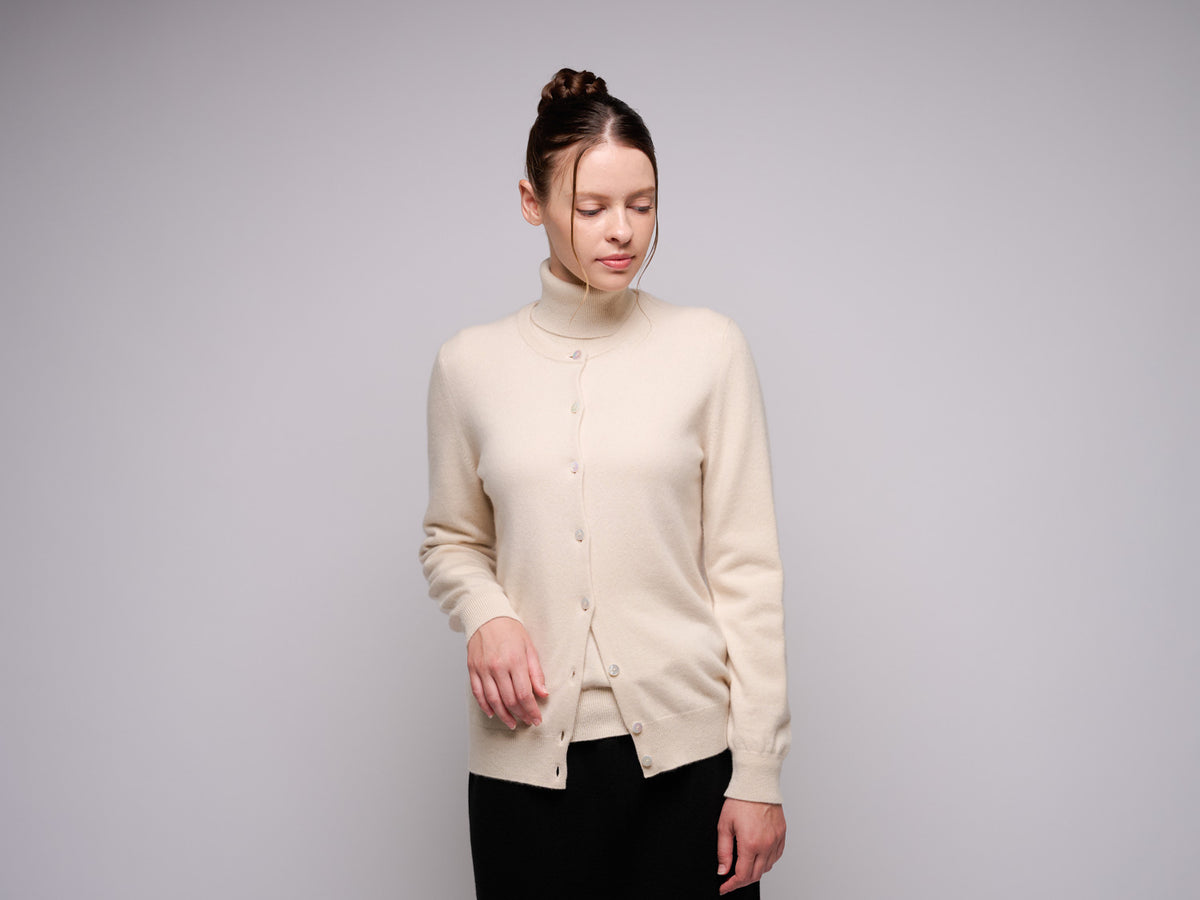


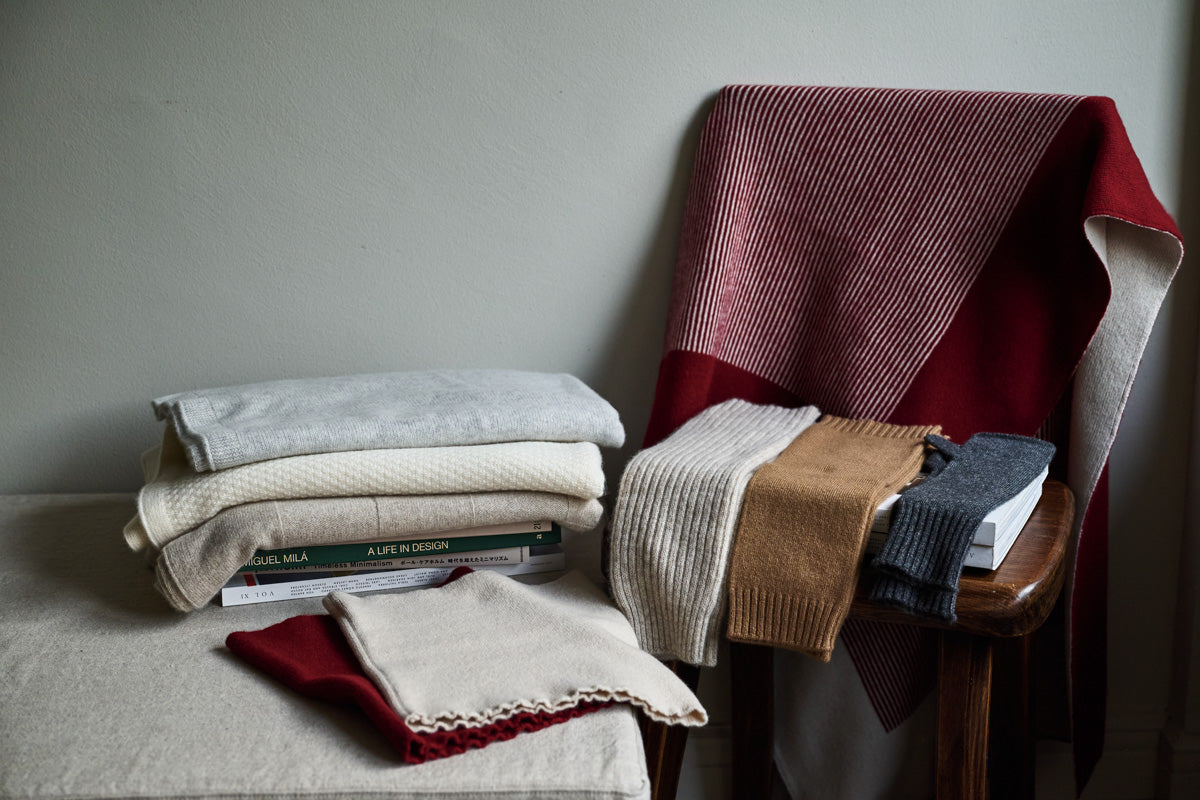
“Cashmere raw wool” used by UTO

UTO is a brand specializing in cashmere knitwear that has been using cashmere materials for over 20 years.
The UTO cashmere artisans in Iwate research cashmere materials all year round, engaging in monthly dialogues with spinning companies (cashmere yarn suppliers).
Spinning companies say that "no other brand is as particular about cashmere materials as UTO." We spend a lot of time on it, prioritizing quality and texture above all else.
We are particular about the following 6 points
that contribute to cashmere quality:

Among these six points, we will introduce UTO's commitment to "cashmere raw materials."
What is the grade of cashmere material?
UTO's cashmere knitwear uses "world-class raw materials."
Cashmere raw material is graded from 1st to 9th grade based on factors such as "fiber length and fineness," "impurity content," "color and crimp," and "tension," with 1st grade being the highest.
The higher the grade, the finer the fiber, the longer the fiber length, and the lower the hair inclusion rate.
The highest grade, 1st grade, is only a tiny fraction of the downy hair. The raw material UTO uses is such a rare, highest 1st grade.

Knitwear made from 1st-grade cashmere raw material is characterized by its suppleness, softness, and non-prickly feel against the skin.
Where does the cashmere we use come from?
The cashmere raw material used by UTO comes from "Inner Mongolia, China."
High-quality cashmere raw material is born in "harsh climates."
Inner Mongolia is a region surrounded by harsh climates. It has deserts and rocky plateaus, is dry and windy, with summer temperatures reaching 40-42℃ and winter temperatures dropping to -30℃.
The "downy hair" that grows to withstand the harsh cold of winter in these extreme climatic conditions, compared to other regions, becomes the highest quality raw material, known as the world's finest cashmere.
Is it really 100% cashmere?
Do we use body-friendly materials?
Problems regarding the "100% cashmere" label, such as the mislabeling of cashmere blend ratios in 2008, are often brought up.
At UTO, to ensure our customers feel confident that UTO cashmere knitwear is "100% cashmere," we request "cashmere 100% inspection and certification" from the "Keken" Wool Product Inspection Association.
In addition, we also inspect and obtain certificates for the issue, not limited to cashmere materials, of "whether harmful ingredients are used during dyeing".
(This ingredient is "specific aromatic amine," which is carcinogenic. This ingredient is regulated in EU countries and Asia, and it has been regulated in Japan since 2016. Currently, Europeans seem to be more concerned about this.)

Certificate of "100% Cashmere"

Certificate that "specific aromatic amines do not exceed the standard"
【Related Websites】
Japan Wool Inspection Foundation - Animal Hair Appraisal
BOKEN - Testing for specific aromatic amines derived from azo dyes
For UTO, whose business is cashmere knitwear, any "cashmere knit quality issues" could lead to a complete loss of business.
Therefore, we spare no effort in pursuing "quality and transparency" and only purchase from trusted individuals.
Read about our visit to Inner Mongolia, China, to confirm traceability >>
Furthermore, as we receive many orders for "gifts," we are especially careful about ensuring "peace of mind."
Spinning and production technology that brings out the best in raw materials is also important.
The higher the grade of cashmere, the "higher the quality of the cashmere raw material itself" can be said. However, this does not necessarily mean that the "product quality is good."
Even if high-grade cashmere is used as a raw material, if the spinning and production technologies are poor, the raw material can be damaged and its texture compromised. In addition to good cashmere raw material, high-level technology throughout the product production process is essential to fully utilize the material.
At UTO, to maximize the potential of cashmere material, we have been particular about selecting spinning companies (yarn) and production technology for many years.

other reading material

~ Let your cashmere rest ~ The secret to maintaining classy cashmere
A story about how to rest a cashmere sweater, which is important to keep it looking good for more than 10 years.
Read more

UTO e-mail magazine
Get the latest information on cashmere manufacturing, trivia, and care through our e-mail newsletter!